Where NibbleWatch Started
Long before there was an app, there was a blackboard on a kitchen wall.
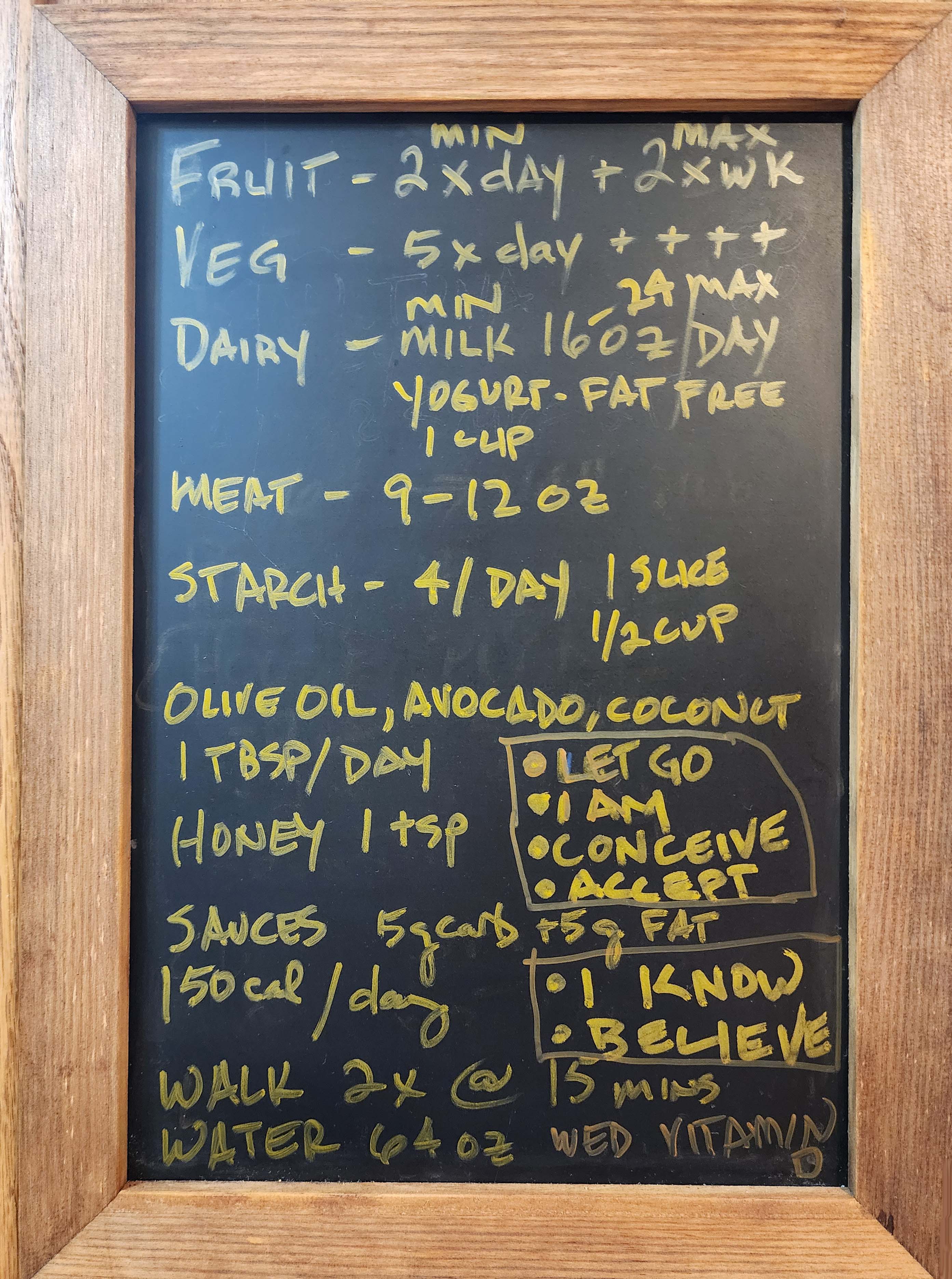
Every one of NibbleWatch's daily targets — fruit, vegetables, dairy, meat, starch, healthy oils, even the daily walk and water goal — started as erasable ink on this board, rewritten and adjusted by hand with each visit to the nutritionist. The app didn't replace the board's thinking; it just gave that thinking a way to track itself automatically.
The two boxed lists in the corner — short reminders I wrote for myself — were the inspiration for writing down your thoughts and feelings each day when it comes to nutrition. Now, they're personal reminders that the numbers were always in service of something bigger than the numbers themselves.
That board is how NibbleWatch started. It is not how NibbleWatch tells you to eat.
The boxes were a structure I used with a nutritionist. I followed it. It did not produce the weight change I expected. Hitting a neat column of ounces is not the same thing as a pattern that works for a particular body.
NibbleWatch does not recommend 9–12 ounces of meat, or any other fixed amount. What it is here to do is keep the log long enough that your totals, weight, sleep, and how you felt can be looked at together. Trends are the point. The board was the first draft of the questions, not the answer.